
Interview: Carol Frost

Carol Frost’s poems have appeared in past issues of The New Republic, The Paris Review, Kenyon Review, Poetry, APR, The New Republic, Poetry International, and others while poems from her recently completed manuscript can be found in The Atlantic, Georgia Review, Plume, and On the Seawall. Collections of poetry have appeared in print from Northwestern University, MadHat, Tupelo, and Graywolf presses. She confesses to having taught with pleasure at Bread Loaf, Washington University, Bucknell, Rollins College, and other such places, and she presently lives in north Central Massachusetts.
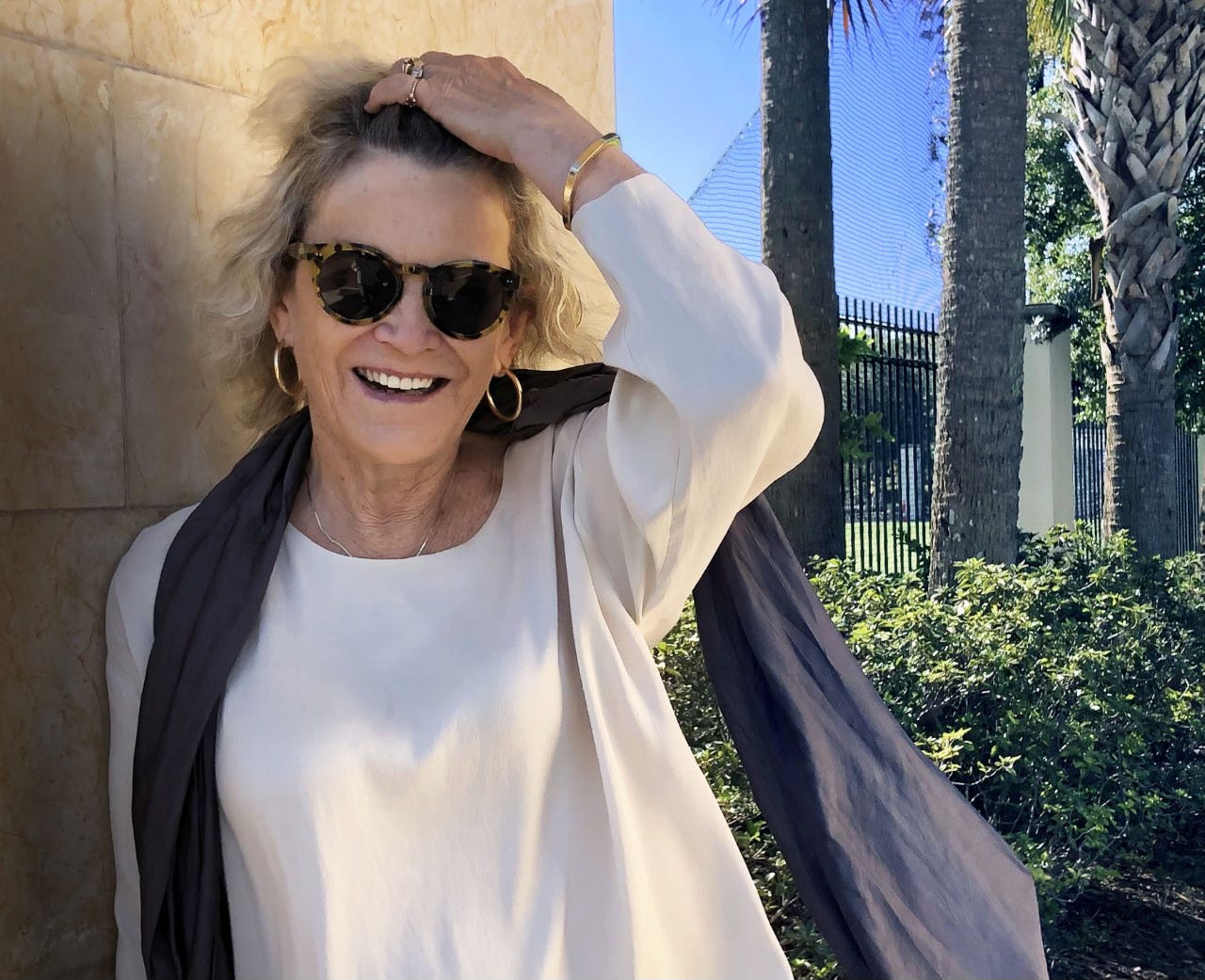
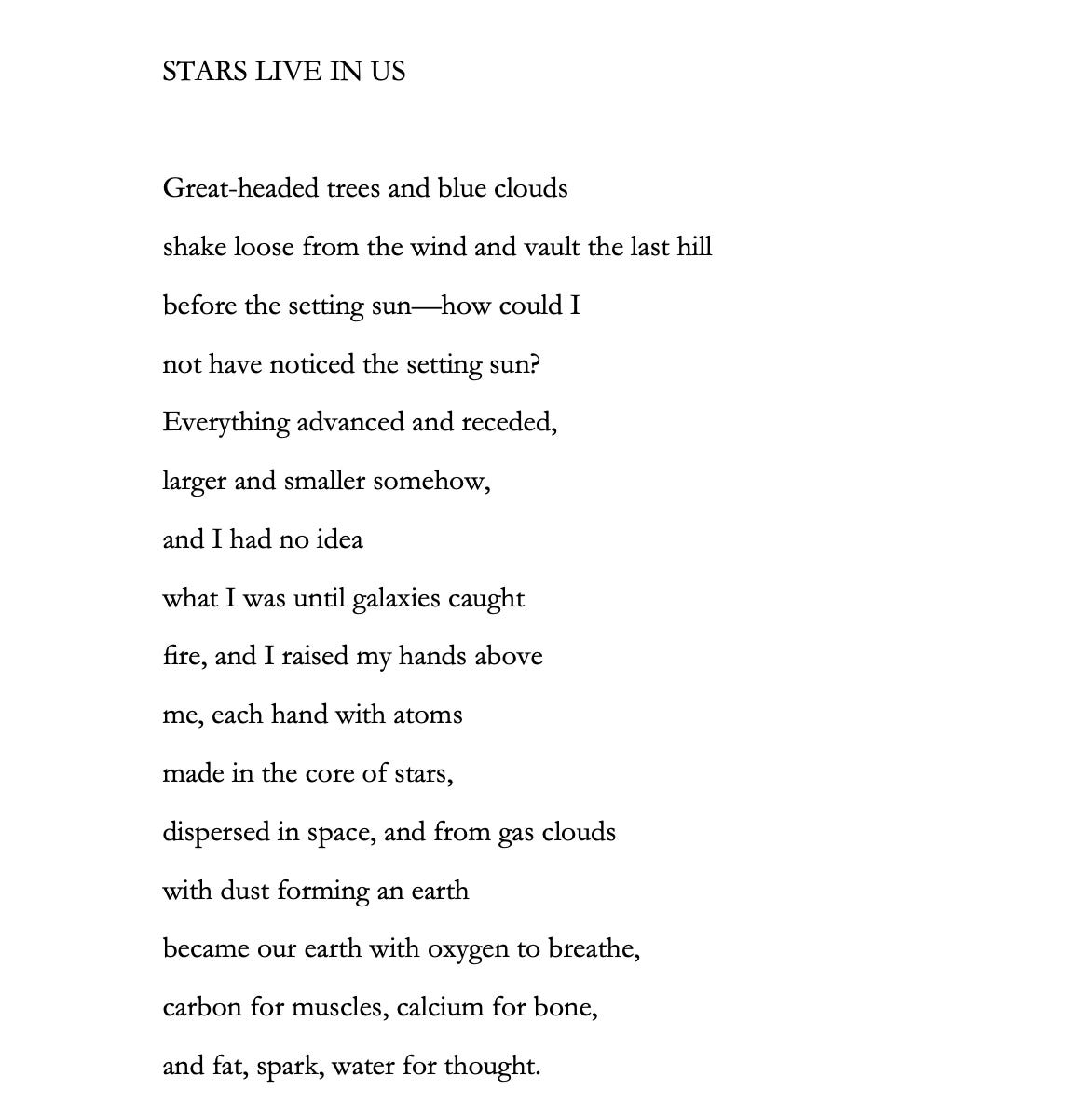
Frost’s poems confront the universe’s apparent desultory attitude toward humankind, even as they affirm and praise the natural world around us. An inner voice arises through her language to experience renewal through ecology in a kind of dark Transcendentalism. Her poems can juxtapose a numinous ambiguity, where praise of nature’s beauty comes to terms with its atavistic predation. “Stars Live in Us” is a good example of her attention to image, the integrity of the line, and passionate syntax.
SS: What is the function of poetry?
CF: I rarely prefer answers to questions, questions seeming to live more in possibility, a distinction not unlike the difference Emily Dickinson made between prose and poetry (“More numerous of Windows”). Indeed, the function of poetry seems importantly related to living truths that will not be put into words and images that surprise no one. Poetry’s function is not to make of its readers a clan of the like-minded. Poetry dares.
SS: What is the hardest thing about writing poetry?
CF: Oh my, the pressure on writers not to succumb to cultural norms! Write poems shaped like boxes. Write street lingo. Waken to heritage. Write a poem that lasts. But how? Consciousness and by that I mean bringing to the desk a self and a sense of awareness of being that self is a hard, hard problem. To write well, I think a poet has to recognize consciousness is not real. The thoughts that come to poets at their desks with the surety of self are what brain and consciousness first supply, and to write well poets have to hold them off until other thoughts emerge. I don't know how it works but I think poetic truth and, yeah, beauty are more fully a part of what’s on the page than what one started with, and the poem is contingent on sound, rhythm, imagined death, fleeting experience from 40 years before, an orange salamander, etc. It seems the thought and everything that goes into the writing of the poem creates its truth.
SS: What would make poetry better or healthier?
CF: This is a question I almost don’t want to answer unless it’s agreed that there’s nothing wrong with poetry. It evolves and adapts and in this way stays healthy. It reinvents itself. It goes off the deep end. Fine. If the question is whether you or I can find a way to write a single poem that creates momentum in itself and lasts, I’d like to say yes but haven’t a recipe. There are secrets and they serve to help brain-broken writers to discover how to fashion somehow through the marvel of syntax, sound, l think line, likeness, and difference, thoughts they didn’t know they could have.
SS: What non-poetry book should poets read?
CF: Memoirs of Hadrian by Marguerite Youcenar. (And read everything you can get your hands on, and not only for what it says but how it has been imagined and written into being.)
SS: Which poet do you think is underrated?
CF: Underrated poets? When poets are writing, I don’t think that occurs to them.
For further reading:
Frost, Carol. Love and Scorn: New and Selected Poems. Chicago: TriQuarterly Books, 2000. [Buy at Bookshop]
—. I Will Say Beauty. Chicago: TriQuarterly/Northwestern University Press, 2003. [Buy at Bookshop]
—. Honeycomb: Poems. Chicago: Northwestern University Press, 2010. [Buy at Bookshop]