
Interview: Mary-Alice Daniel

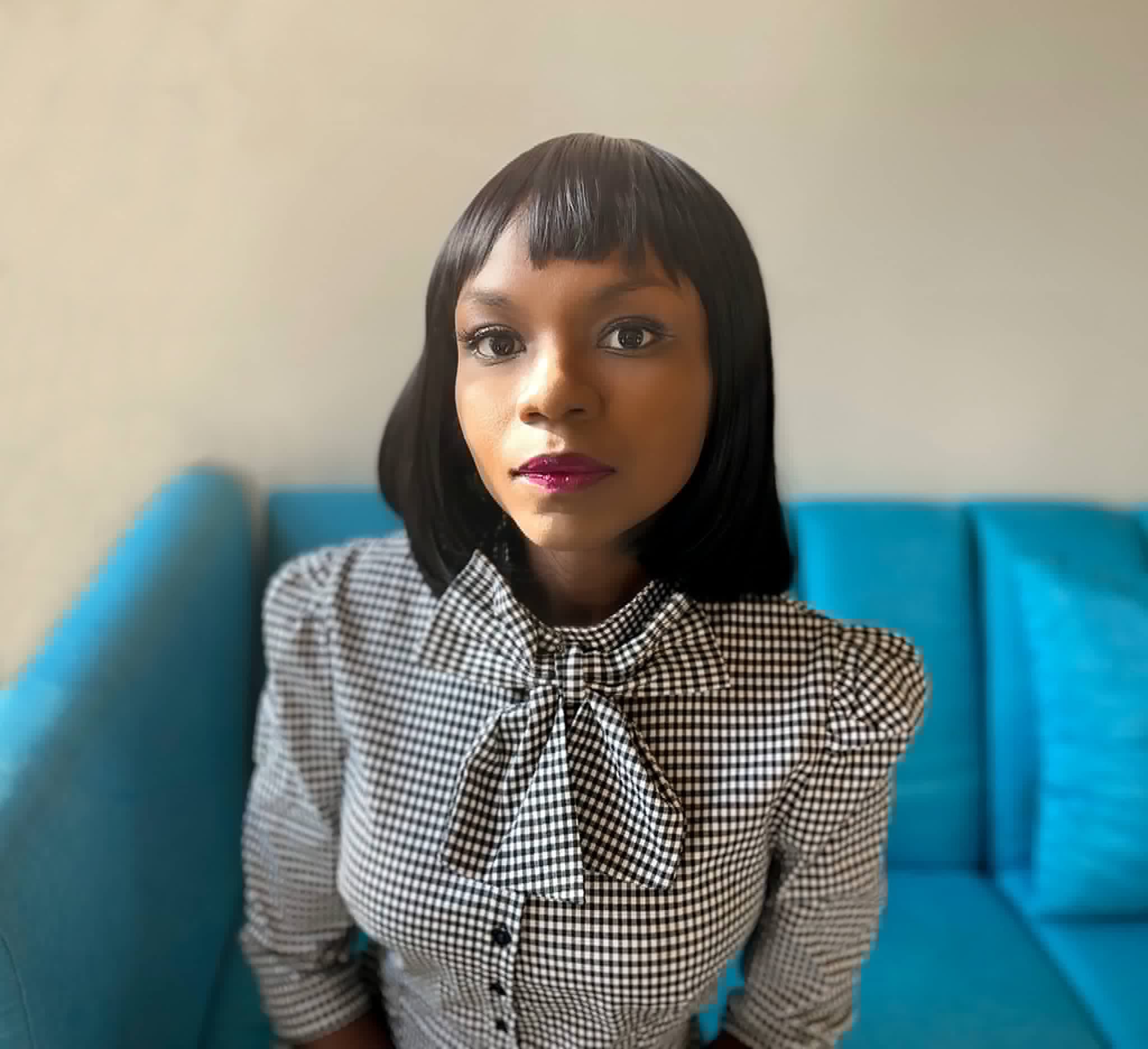
Mary-Alice Daniel was born near the Niger/Nigeria border, then raised in England and Tennessee. Her poetry debut, Mass for Shut-Ins (2023), won the 117th Yale Younger Poets Prize. Her memoir, A Coastline Is an Immeasurable Thing (Ecco/HarperCollins 2022), was People’s Book of the Week and one of Kirkus Reviews’ Best Nonfiction Books of the Year. Upon receiving a doctorate from the University of Southern California, she held the Mary Routt Endowed Chair of Writing at Scripps College. She teaches African mythology at Princeton University.
SOCIAL MEDIA:
· website: maryalicedaniel.com
· instagram.com/drmaryalicedaniel
· x.com/MaryAlicePoetry
· linktr.ee/maryalicedaniel
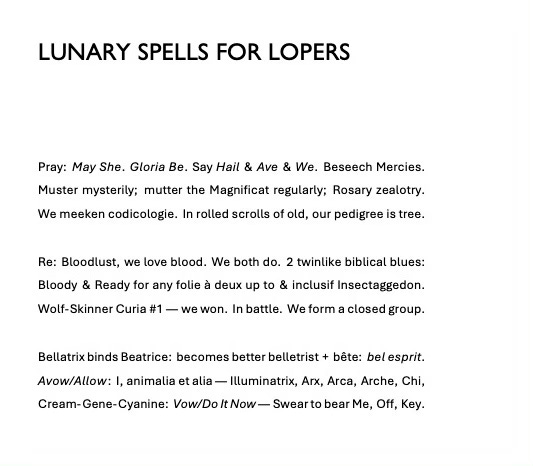
Daniels’s poems are highly musical and exhibit a broad range of voices, imaginative leaps, and historical analysis. Challenging, indebted to Surrealism, and attentive to human myths and dreams, her poems insist that the reader be an active and creative participant. Turning her life into legend, a poem like “Lunary Spells for Lopers” shows the acuteness of transformation. Unworried about changing the tenor and pitch of the language, the poem electrifies the monsters that tend to live at the bottom of an artist’s brain.
SS: What is the function of poetry?
MD: Poetry functions like a good inside joke. Like those told between lifelong friends so closely grown they speak in obscure shorthand. Codewords; the well-timed glance; innuendo. References to bad times; to benign times; to bright mood and black humor by way of punchline. Evolving each time offered — darker; darkening; deadpan; denser. The inside jokes we sustain are esoteric, particular, personal: hyper-specific language understood by exactly one audience. For those few, they invoke the most meaning words can.
Over the years, junk piles up in our memory palaces. We immortalize inside jokes, set safely upon a mantel sentimental. Nonlinear & long-running, layer-by-layer interlacing, ever-overlaying. Poetic text likewise compresses multifold sense and significance into a scant semantic package. All contents, concentration. Dissolving, each line authored — closer; tenser.
SS: What is the hardest thing about writing poetry?
MD: the deDreaming.
When I was younger, I began to frighten before an inferno ahead: one waiting at the end of my life — my fate for lack of faith. I harbored high hopes that before I died, scientists would have determined exactly how we are Here + what we’re doing. The writer Carlos Antonio Delgado coined “hellMaybe” to convey the particularly tenacious unrest that preys upon those raised in fundamentalism. The hardest thing about writing poetry is that it does nearly nothing to blunt worries of blue ruin — deadens not dreading; nor calming it is contra calamity. In fact, it entrenches. Infixes. Inflicts. See the future. Just there. So look away — while in pursuit of poems, the hardest task is tending too much else. Embodied to a degree, we enter our imagining. One emerges in mornings after mentally exhausting marathons in meter & -mancy. One wants to ease into to afternoons of other, further. We assert ourselves as part of the world off-page: often ill-lit, inarticulable, this place of pushing past people. Whole-ish. Humans of happy thoughts.
SS: What would make poetry better or healthier?
MD: My older brother sometimes comes across my poetry: sometimes intentionally, sometimes by way of a draft left in the printer at my parents’ house. He always comments a variant of the same thing: “I didn’t get it — but I liked it.” There is a case that must be made for poetry to those who are not of its regular readership. I’m talking past accessibility; I’m talking toward application. Consider the potential uses of poetry in a variety of disciplines. My brother, who works in the medical field, may not make mistakes. One consequence of carelessness is death. For him, I have recommended a practice of poetry that dwells/delights in minutiae. Read a poem and avoid asking what there is to ‘get’ — notice, rather, every punctuation mark. Every single mark. I asked him to indulge me and devote 5 minutes of his week to this practice. If I am right, I may have outlined an unconventional entry into verse. I may have encouraged him to exploit language. If I am wrong, I will devise some other 5-minute gimmick. Somehow, I’ll get him.
SS: What non-poetry book should poets read?
MD: I began to theorize that many celestial objects are unhappy with their names. I began to explore the naming of stars in many systems and languages, weighing what I would do were this task left to me. It was only an exercise; it was an act of awe. Star Names: Their Lore and Meaning, published in 1899 by Richard Hinckley Allen, is now outdated. I care not. This index defers to the Otherworld overhead. Startime is not our time. Ours is always just about over. This is good to remember.
SS: Which poet do you think is underrated?
MD: Mark Leidner, whose “Romantic Comedies” exemplifies the surprising, sharp turns the list poem can make:
https://www.oatridge.co.uk/poems/m/mark-leidner-romantic-comedies.php
Without question, the most poetic interview responses of this lifetime. Genre breaking where least expected. Send Mary-Alice Daniel more questions next month.
I spent a few weeks reading and rereading Mass for Shut-Ins last summer. I was so glad to read this wonderful interview, I love her work!