
Interview: Terese Svoboda

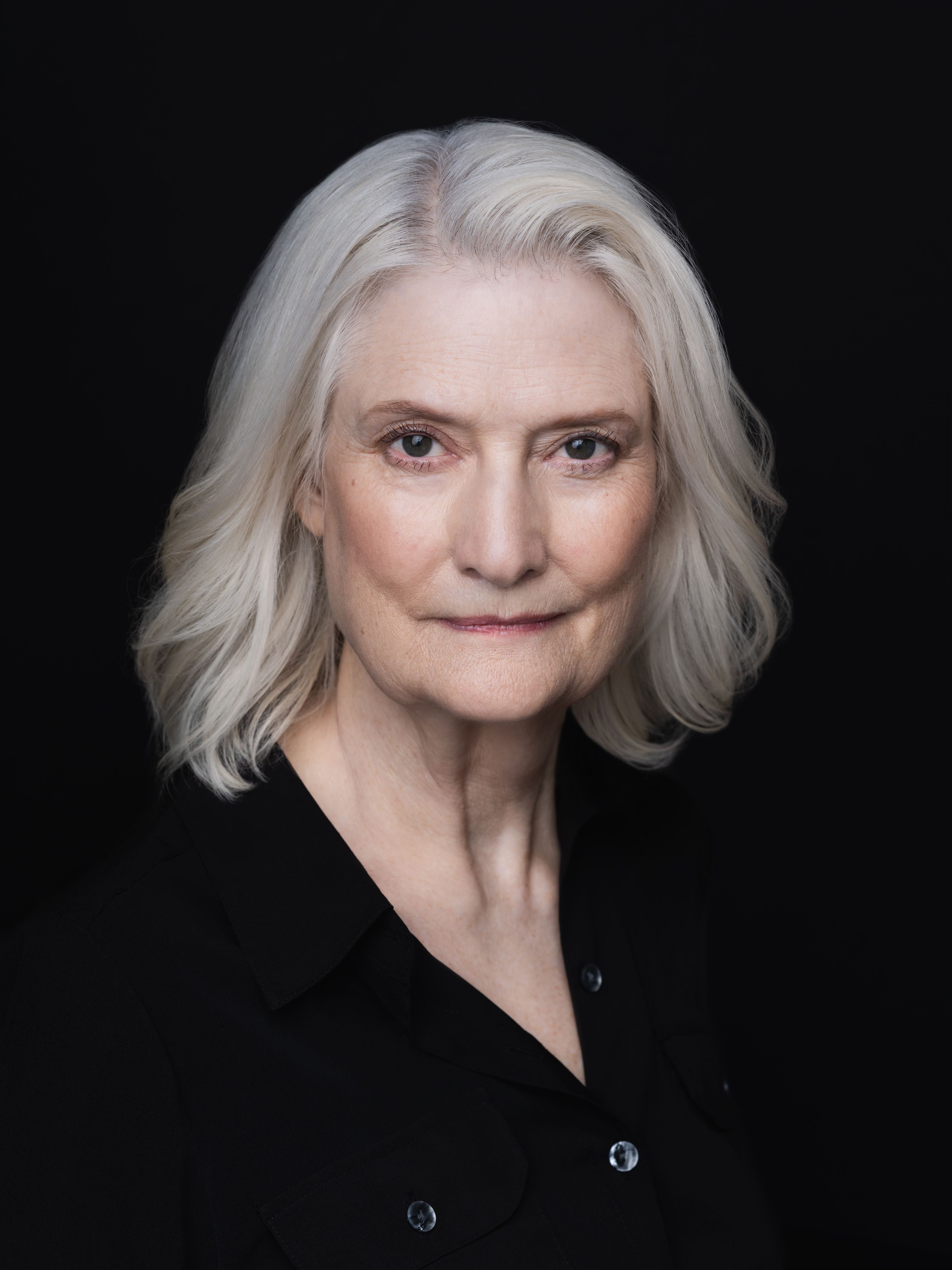
Terese Svoboda has published 8 books of poetry, most recently Theatrix: Poetry Plays (Anhinga, 2021). She is also the author of 16 books of fiction, biography, memoir, translation and opera.
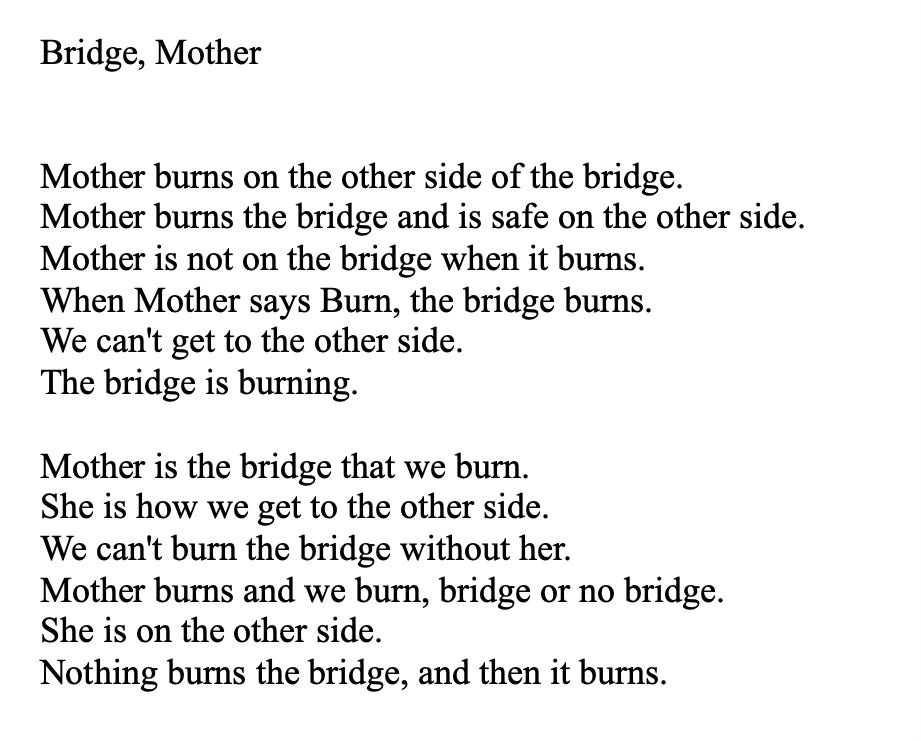
Svoboda’s range is expansive, mercurial, and inventive. Over 24 books in all genres, she isn’t bound by anything, including the limits of the imagination. “Bridge, Mother” is a fine example of the motions of the mind.
It uses two equally balanced, six-line stanzas and anaphora to stretch and manipulate the expression “burning the bridge,” meaning “intentionally damaging a relationship, to the point where it cannot be repaired or returned to.” The poem uses the most primary and Freudian of subjects to explore the needling phrase, mother. No matter what iteration of syntactical whirling happens, someone gets burned.
SS: What is the function of poetry?
TS: Poetry is serious play and the mind, like the body, needs play . While reading poetry is not a puzzle, writing it always is.The sounds in and between words, the connotations, how the words look arranged together and apart, how punctuation changes the intonation and “personality” of a line, and how the poem on the page unspools either as a gestalt or over time, line after line. That’s a lot of play.
SS: What is the hardest thing about writing poetry?
TS: Clarity. So many words will do, but only a few will express—as in “press” out—enough meaning to hold the skein of form together.
SS: What would make poetry better or healthier?
TS: Push-ups? Better is such a difficult concept as it’s tied to an idea of progression and comparison. Poetry is always coming into being and often it’s in-between in its task of trying to remake the language so sometimes the results seem worse or flailing or even failing. No one should be left out; we’re all attracted by its fire.
SS: What non-poetry book should poets read?
TS: I’m always interested in the lingo used by artists who are inventing with electricity. They are making new language and it’s seldom in a book of poetry—more likely a users’ manual. Call a shellscript session to update and configure; as daemon we must learn switchmode in tinc or vpn to wake up on lan (WOL). Or else Helen Dewitt’s The English Understand Wool, the strange aborigine novels of Alexis Wright, the bizarre Mongolian/French future of Antoine Volodine, the remade memoir of Marie NDiaye’s Self Portrait in Green.
SS: Which poet do you think is underrated?
TS: Caroline Knox would be my number one. Her poems release the uncanny past into the unknowable future without stopping in the mysterious present. Her last five books published by Wave are exquisite.
For further reading:
Svoboda, Terese. Mere Mortals: Poems. Athens, GA: University of Georgia Press, 2009. [Buy at Bookshop]
—. Weapons Grade: Poems. Little Rock, AR: University of Arkansas Press, 2009. [Buy at Bookshop]
—. Anything That Burns You: A Portrait of Lola Ridge, Radical Poet. New York: Schaffner Press, 2016. [Buy at Bookshop]
—. Professor Harriman’s Steam Air-Ship. London: Eyewear Publishing, 2016. [Buy at Bookshop]
—. Theatrix: Poetry Plays. United States: Anhinga Press, 2021. [Buy at Bookshop]
Push-ups!
Clarity!!! I could not agree more. Without poetic skill and craft and care, that which is so clear to a writer may be completely inaccessible to the reader.