
Writing Problems: Future Tense

Psychologists have a technique sometimes called “neural priming” that trains the mind to experience future desires as memories. Semantically, expressing the future as past (“I did a thing” instead of “I will do a thing”) can decrease doubt and increase imaginative capacity.
Poems can be tools for cognitive reframing because they collapse present and future in a passionate syntax that weights the possibility of revelation. We happen to be living at a time when people are mourning the future rather than the past. Normally, mourning the past is expected: war, disease, and loss are felt by people in ritualistic and totemic zones of memory. Now, a quarter way through the 21st century, the future may feel unimaginable—a place more torn down than built up.
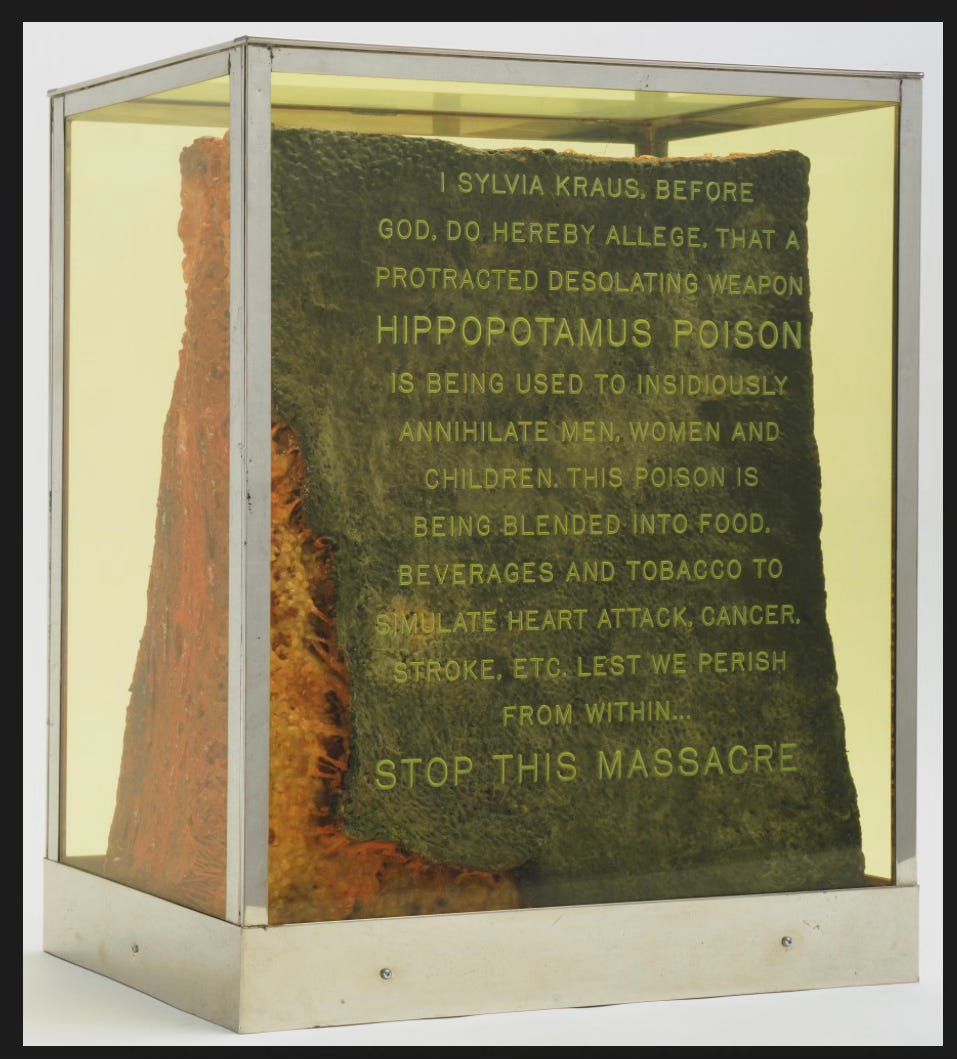
Mourning the past is reasonable and expected; mourning the future is not. Poetry can be an important tool to make this cognitive Mobius strip make sense. Emily Dickinson, one of the seers of poetry, in a late poem from 1884, said:
Oh Future! thou / secreted peace
Or subterranean [unsuspected] wo—
Is there no wan- / dering route of / grace
That leads away from thee—[sage
soft/ no circuit / of all the coarse lines
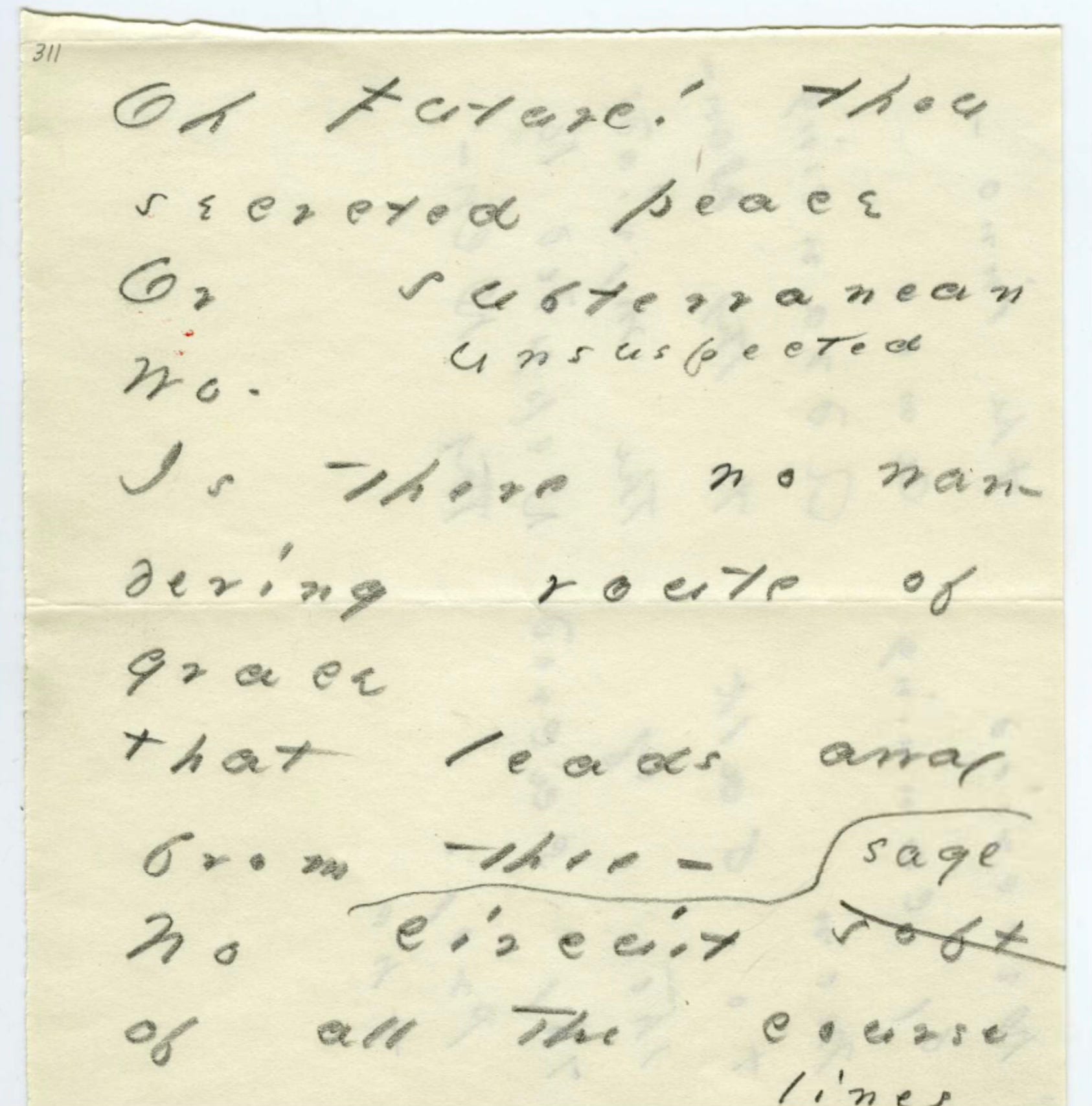
Her fragmented, diverging summoning gives clarity to the mystery. The future is unsuspected and subterranean because thinking people are caught in a conundrum—how can a person make material change or psychic change in a world where predictive software, machine learning, and artificial intelligence is replacing us?
Dickinson’s question is cut-off before it gets a question mark; her em-dashes deliberately lack fixity. Rather, she’s into flux and fluidity. She’s a cypher. This draft,
