

Laurie Sheck is the author of three hybrid novels and five books of poems including The Willow Grove which was a Finalist for the Pulitzer Prize. Her novel, A Monster’s Notes, was long-listed for the Dublin International Fiction Prize and chosen by Entertainment Weekly as one of the 10 Best Fictions of the Year. Her most recent book is Cyborg Fever, a novel. She has been a Guggenheim Fellow, a Fellow at the Radcliffe Institute for Advanced Study at Harvard and at the Cullman Center for Scholars and Writers at the NYPL. Her work has appeared widely in such publications as The New Yorker, Granta, and The Paris Review. A monthly columnist for the online magazine 3 Quarks Daily, she is also a member of the MFA Creative Writing faculty at the New School and divides her time between New York City and California.
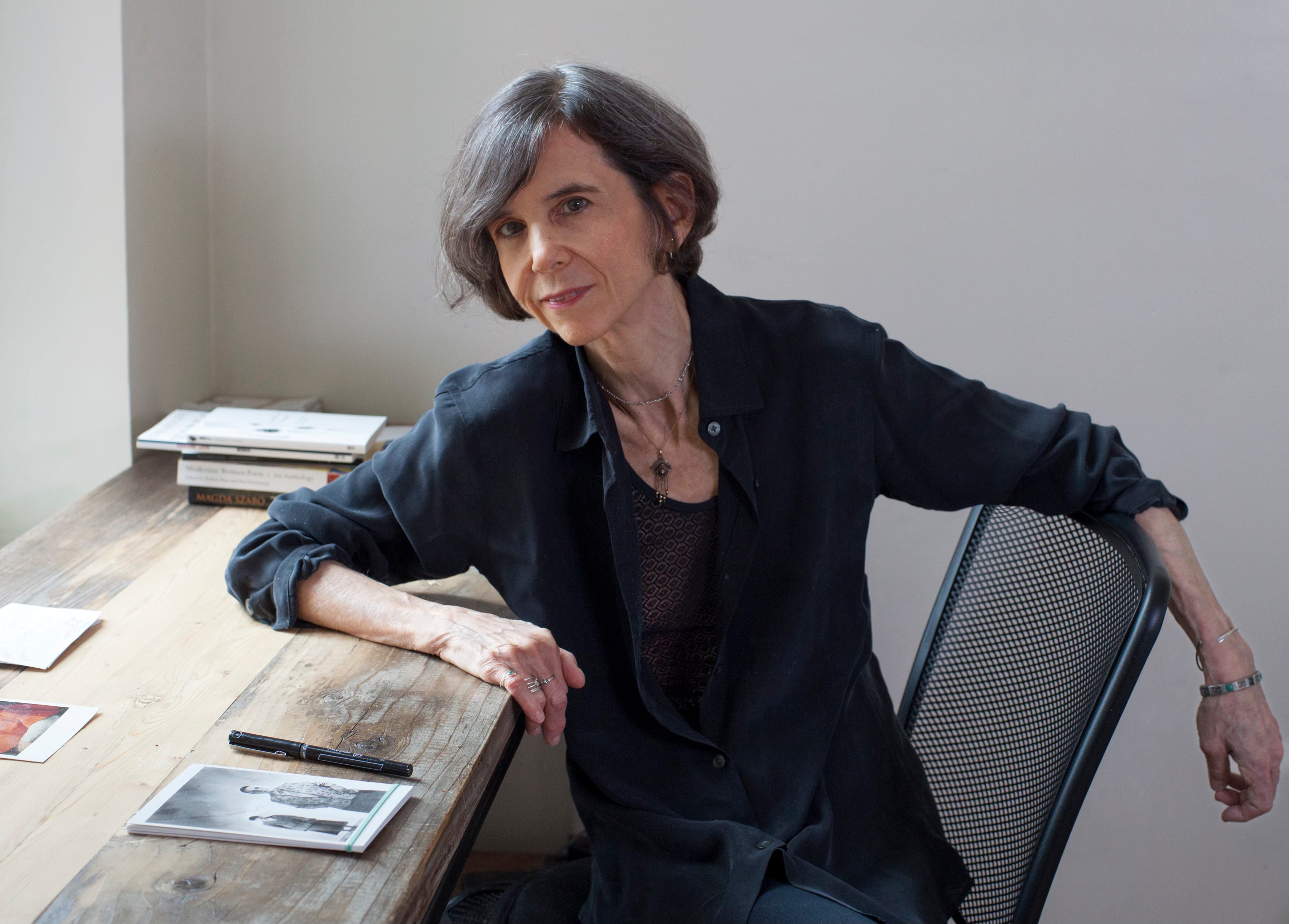
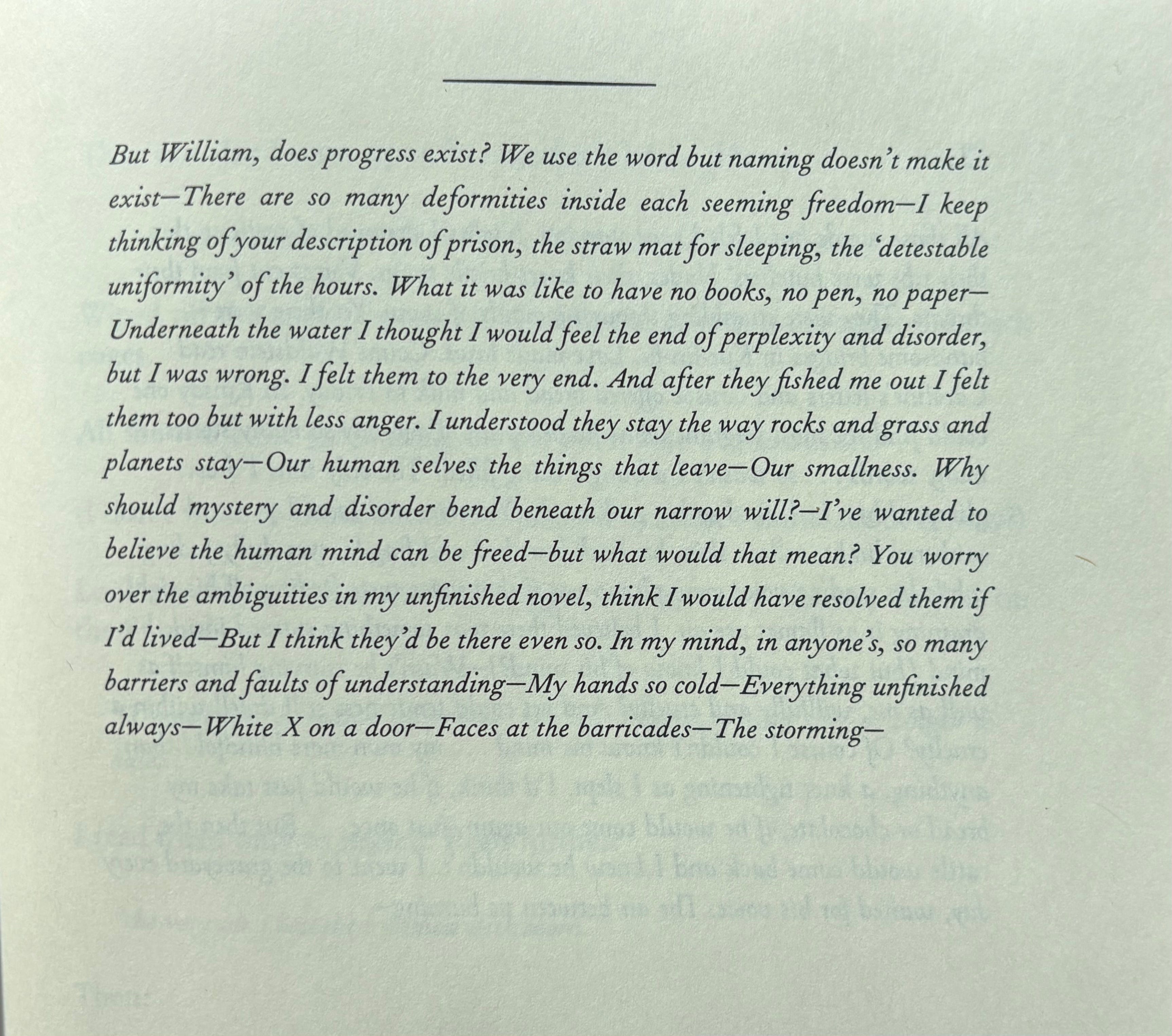
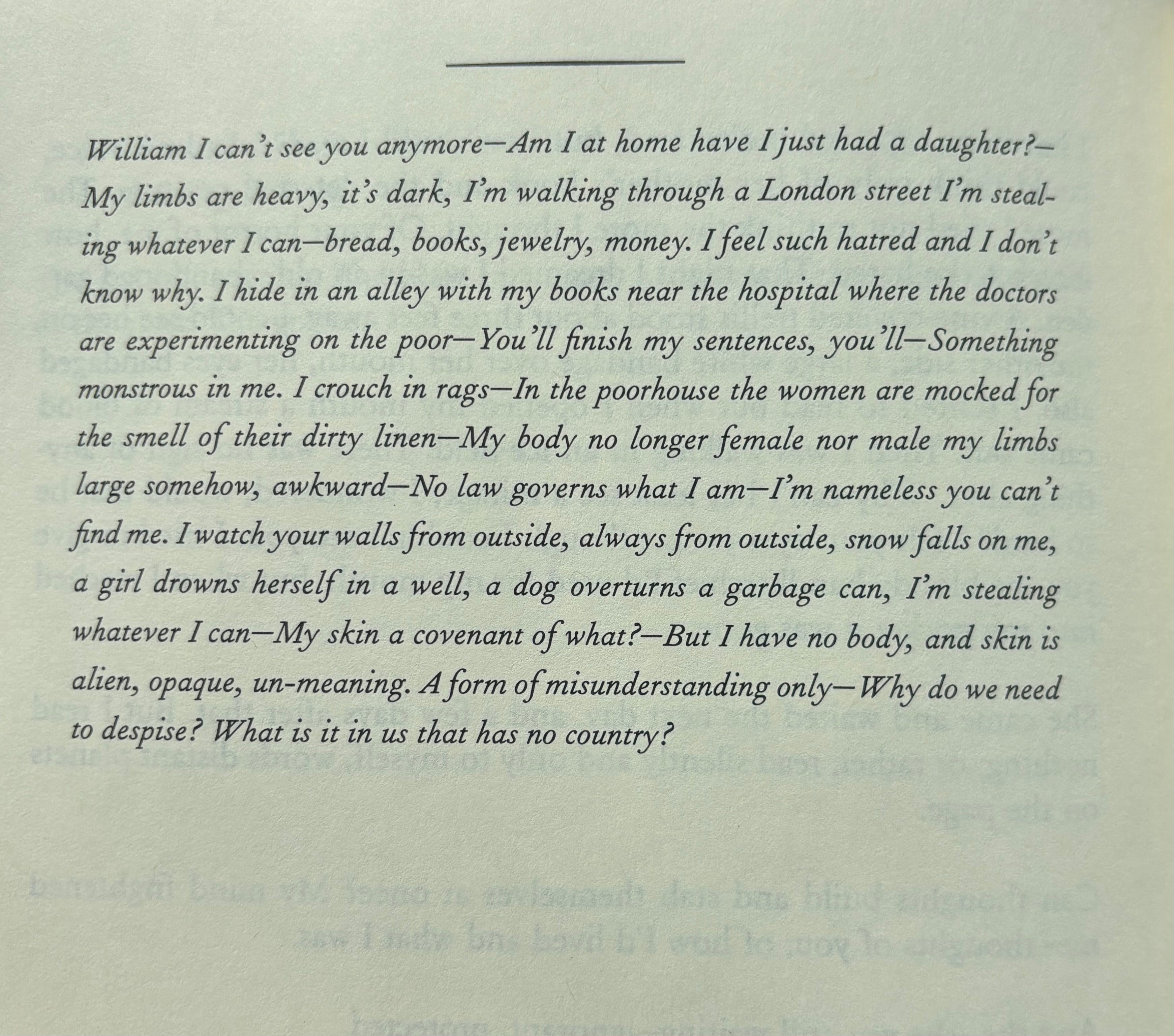
Laurie Sheck’s writing is beyond category. These excerpts from her novel-in-verse, A Monster’s Notes, are spoken by Mary Wollstonecraft in delirium as she is dying. They are addressed to her husband William Godwin. Wollstonecraft died 11 days after giving birth to Mary Shelley. Characteristic of Sheck’s poetry generally, the language pushes into strangeness and a world-forming mythology; it’s psychologically rich, but physically disorienting. The speakers are entwined with monsters of internal and external pressures. The language oscillates between impulses towards a wild spark and a refusal to acknowledge death.
SS: What is the function of poetry?
LS: The Oxford dictionary defines function as “an activity or purpose natural to or intended for a person or thing.” For example, “bridges perform the function of providing access across water.” For me, one of the beautiful and essential things about poetry, or any art form, is that in a sense it transcends function. Yes, it makes visible the invisible and so helps create a bond and understanding and solace among humans; yes it enacts the mystery, precision and texture of human thought and feeling and the nature of language itself, but it is also like the sun and moon—elemental in that it exists in and of itself, a nervous system made of words, existing the way a human body exists—pure being in all its radiances, curiosities, hurts and contradictions.
SS: What is the hardest thing about writing poetry?
LS: The hardest thing about writing poetry is when, even with great effort, it just isn’t happening. When the poetry is happening in a genuine way the challenges can be difficult but they are a difficult joy—challenges of how to be receptive and active at once; how to understand what honesty truly is and how to push it to its farthest edge; how to feel every syllable; how not to be consumed by a period style or approval from outside.
SS: What would make poetry better or healthier?
LS: I don’t think poetry needs to be healthy; the human race isn’t healthy. I think it needs to be alive without our judging what is better or healthier because we cannot know. It is the genuine that survives, a kind of radical willingness that creates an authentic piece of art, an utterance, but that can’t really be foreknown or prescribed. What can look misguided in one era may shine in the next. To take an example from another form, the novel, Frankenstein was seen as an abomination when it was first published; it was seen as the epitome of “unhealthful”, bad writing; almost all of the reviews were extremely negative. Time has shown those reviews were glaringly mistaken.
SS: What non-poetry book should poets read?
LS: I don’t believe in “shoulds” but for myself I have found that reading widely in many areas has greatly enriched my life and my ways of thinking, my areas of inquiry and my own writing, especially as I have moved into writing in more hybrid forms. Science, philosophy, graphic novels, histories, memoirs, art books, detective novels—the list goes on and on. For myself, I am very grateful to have read over these past years the great Chinese classic, Dream of the Red Chamber, Anne Dufourmantelle’s Power of Gentleness, Cormac McCarthy’s Stella Maris, many books on black holes and the universe, Dostoevsky’s The Idiot, the Deadpool comics, W.G. Sebald’s books, John Berger’s essays, and Carlo Rovelli’s Seven Brief Lessons on Physics and Helgoland.
SS:Which poet do you think is underrated?
LS: I’m not sure I’m too good at knowing how various poets are really regarded except in a kind of general way. One poet who is not necessarily underrated but is worth drawing attention to especially in this time we are now living in is the Austrian poet and writer Ingeborg Bachmann (1926-1973) whose brilliant poems grappled with a war-ravaged world that had in many ways gone mad and the beauties that endured even so: “Like an afterthought, the universe submits / to familiar equations, such as the light / that falls but leaves the snow untouched.” And: “And where is the sun? / It’s far away. / In fact I / am where I / cannot be.”
For further reading:
Sheck, Laurie. Cyborg Fever. North Adams, MA: Tupelo Press, 2025. [Buy at Bookshop]
—. A Monster’s Notes. New York: Knopf, 2012. [Buy at Bookshop]
—. Black Series: Poems. New York: Knopf, 2012. [Buy at Bookshop]
—. Captivity: Poems. New York: Knopf, 2009. [Buy at Bookshop]
New Guided Poetry Reading Groups
REGISTER HERE:
https://www.seansingerpoetry.com/join-book-club
Fall/Winter 2026
Reading Groups are facilitated sessions guiding committed poets and poetry readers in a practice of reading more deeply, creatively, and intentionally. Each month, groups perform a close reading of a current book of poetry—books that are overlooked and underrated, books that have something important to tell us about what it is to be alive today.
Groups meet once a month for two hours. Outside of meeting times, I’ll support your reading with prompts, guiding questions, and supplementary materials with a special focus on issues of craft.
Sunday Reading Group Fall 2026
11 am-1 pm EST
Sept. 20, Oct. 25, Nov. 22, Dec. 20
Christopher Gilbert, Turning into Dwelling (Graywolf, 2015)
Caroline Knox, To Drink Boiled Snow (Wave, 2015)
Joan Murray, Drafts, Fragments, and Poems: The Complete Poetry (NYRB, 2018)
Rachel Wetzsteon, Sakura Park (Persea, 2006)
Thursday Reading Group Fall 2026
10 am-12 pm EST
Sept. 24, Oct. 22, Nov. 19, Dec. 17
Robert Hayden, Collected Poems (Liveright, 2013)
Laurie Sheck, Captivity (Knopf, 2009)
Bill Knott, I Am Flying into Myself: Selected Poems, 1960-2014 (FSG, 2018)
Donna Masini, Did You Find Everything You Were Looking For? (Norton, 2026)
Sheck’s answer to the function question has my applause. I guess she’s right about healthiness in poetry, too: yes, the unhealthy have an early expiration.
i’ve been a fan of her poetry for a long time! glad to read this interview.